
Instructions, Videos and FAQ
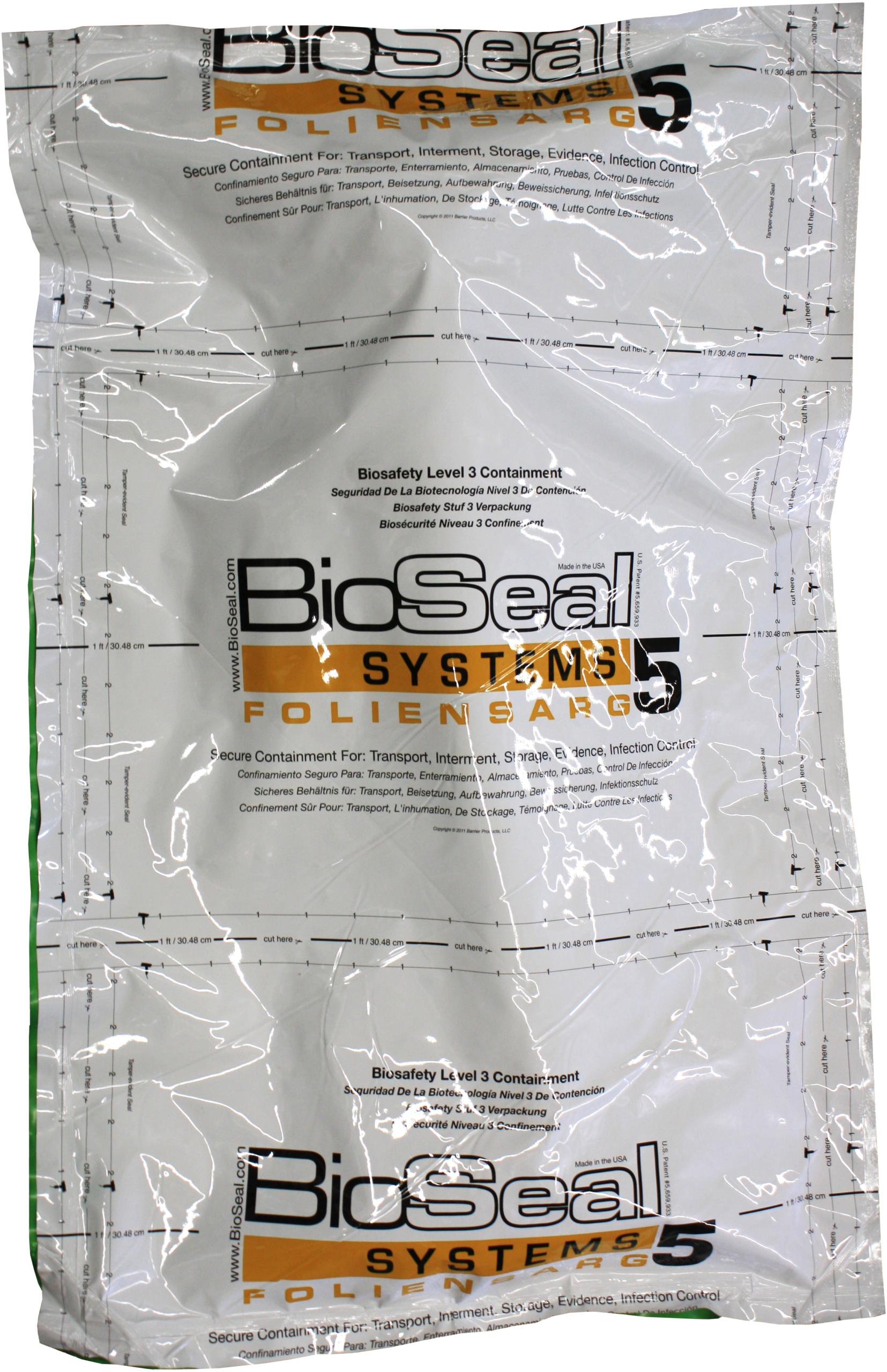
Yes, we invented BioSeal in 1993 and since then it has been successfully deployed for the recovery, containment, storage, and transport of remains at major natural and manmade mass fatality disasters, both in the US and abroad, including the crash of Swiss Air flight 111 in 1998, the 9/11 terrorist attacks, tsunamis in Thailand and Japan, Hurricane Katrina, the 2014 Ebola outbreak and the COVID 19 outbreak.
And BioSeal is not just for emergencies, we also sell to funeral homes, mortuary transport companies, hospitals and more. Anyone looking for easy-to-use containment of human remains.
Usage is straightforward. We have a 3-page instruction document which you will receive with your purchase. We also have instructional videos on our website.
BSL-4 is the highest level of biocontainment, defined by the CDC for handling highly dangerous pathogens like Ebola/VHF. System5® is rated BSL-4 and required by CDC guidelines as part of Ebola containment procedures
It uses heat welding with a handheld heat sealer to create a hermetic seal.
After initially heating up the heat sealer, it takes about 5 minutes to seal adult-length pouch.
Yes. You can use another heat sealer as long as it can reliably maintain the optimal sealing temperature of 170°C / 338°F.
However, our testing found that many generic heat sealers do not maintain a consistent temperature throughout the sealing process. For this reason, we custom-designed our heat sealer specifically for BioSeal System5® material, with an emphasis on precise, constant temperature control.
Customers using other heat sealers sometimes report that sealing the bag completely takes longer. With our heat sealer maintaining the correct temperature, the entire sealing process should take approximately 5 minutes.
49 years under reasonable indoor conditions.
20 adult-sized decedents.
Refer to the CDC website for updated guidelines:
Yes, the material is chlorine-free and cremation-safe.
The weight capacity of a sealed BioSeal pouch is up to 400 lbs.
Material comes in rolls: 150 ft long × 36 inches wide; cut-to-size as needed.
We also offer pre-cut pouches which are: 96 inches long x 36 inches wide.
Yes—cut open and reseal, though not recommended for hazardous remains.
Tamper-proof graphics indicate whether a seal has been altered.
- Preheat heat sealer, put on full PPE, and turn on exhaust fan if available as odors may be present.
- Cut a small hole in a corner of the bag with scissors to release gas. Watch for escaping fluids.
- Clean any leaked fluids with disinfectant wipes.
- Reseal the corner using the cross-sealing technique (see video).
- The bag should now be fully degassed and sealed.
As far as we know, dry ice will not negatively affect the material, however, we have no testing or data to properly answer that question. End users should consider testing it first and perhaps they should use an intermediate container (another bag) to avoid direct contact. Also, important, is that dry ice produces a gas as it melts, and that gas may inflate the BioSeal pouch which may cause it to burst.
Our products are distributed across the U.S., Canada, Mexico, the UK, EU, Australia, New Zealand, and parts of Africa. Visit our to Purchase page find a distributor.
Products are sold through the a network of distributors. You can find distributors on our Purchase page.
Send Us a Message
EXTRA PACKAGING LLC
Extra Packaging
104 NW Spanish River Blvd
Boca Raton, FL 33431
Extra Packaging
341 Bullis St
Eagle Pass, TX 78852
Extra Packaging
119-R Foster St, Building 8
Peabody, MA 01960